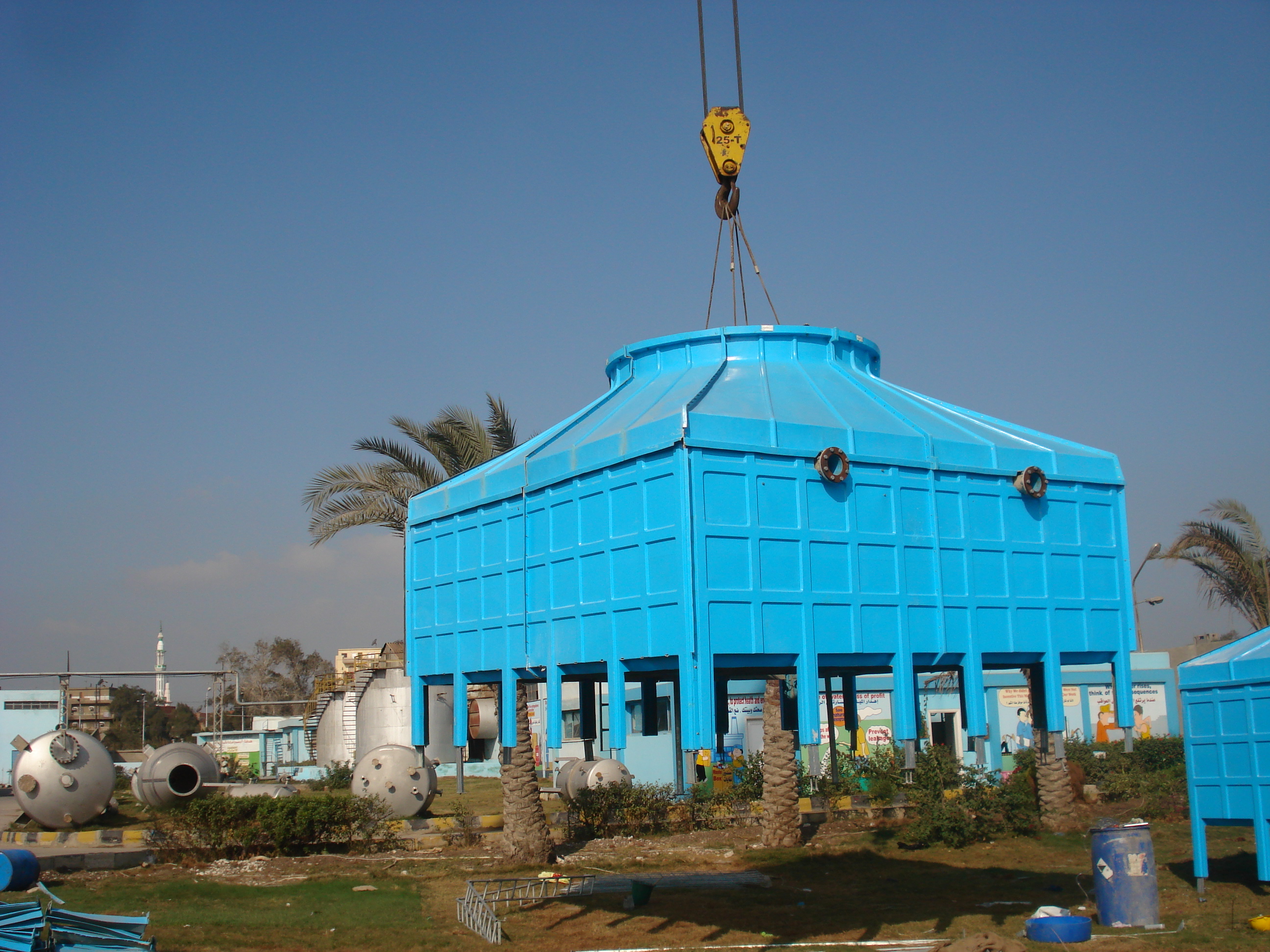
Closed Loop Cooling Tower
Request a Quote
Closed Loop Cooling Towers provide an efficient, low-maintenance method for rejecting process heat while preserving the cleanliness and integrity of the process fluid. Engineered for environments where uptime, water conservation, and fluid purity are critical, these systems are widely adopted in HVAC, manufacturing, data centers, and mission-critical infrastructure.
With increasing pressure on water resources, rising energy costs, and stricter equipment lifespan expectations, a Closed Loop Cooling Tower delivers unmatched control, efficiency, and protection in heat rejection systems.
What Is a Closed Loop Cooling Tower?
A Closed Loop Cooling Tower is a type of evaporative cooling equipment that maintains a sealed process fluid loop while transferring heat to the atmosphere through a combination of water and airflow.Unlike open systems, where process fluid is sprayed or circulated through fill media and exposed to the atmosphere, a closed loop system confines the process fluid within a closed heat exchanger coil. This prevents the fluid from being contaminated by airborne particles, bacteria, scale-forming minerals, or chemical pollutants.
The system uses a secondary spray water loop to remove heat from the coil’s surface. This spray water evaporates as it comes into contact with outside air, efficiently cooling the process fluid without direct exposure. This design provides key operational and maintenance advantages, particularly in demanding industrial environments.
How a Closed Loop Cooling Tower Works
- Process Fluid Circulation Hot process fluid enters the closed coil system from the application—such as a chiller, compressor, molding machine, or server rack.
- Heat Transfer Across the Coil Spray water is pumped from the basin and distributed over the coil surface. At the same time, ambient air is drawn or pushed across the coil by axial or centrifugal fans. The combination of evaporative cooling and convective airflow removes heat from the fluid inside the coil.
- Evaporation and Cooling A small portion of the spray water evaporates, extracting latent heat and reducing the temperature of both the coil surface and the process fluid inside.
- Recirculation The remaining spray water falls back into the collection basin, where it is recirculated through the pump and reused. Only minimal water makeup is needed to replace evaporative losses.
- Heat-Rejected Air Exhaust The heated and moisture-laden air is expelled through the discharge outlet of the tower, typically at the top.
Core Components and Configuration Options
Heat Exchanger Coil
- Constructed from heavy-duty galvanized steel, 304L/316L stainless steel, or copper.
- Designed for high thermal conductivity and maximum surface area.
- Optional epoxy coating or polymer linings for corrosive environments.
Fan System
- Available in axial or centrifugal configurations.
- High-efficiency motors (IE3/IE4) with optional variable frequency drives.
- Configurable for top-mounted or side-mounted discharge.
Spray Water Distribution
- PVC or stainless steel spray headers and nozzles.
- Even water distribution across the coil to prevent dry spots and scaling.
- Removable and accessible for inspection and cleaning.
Water Collection Basin
- Sloped basin for full drainage and minimal water retention.
- Made of galvanized or stainless steel with anti-corrosion coating.
- Access doors for cleaning, flushing, and maintenance.
Pump Package
- Recirculating pumps selected based on system flow rates and head loss.
- Pump skid options include dual redundancy and VFDs for energy savings.
Controls and Sensors
- Digital control panels with temperature, pressure, and flow monitoring.
- BAS integration via Modbus, BACnet, or LonWorks.
- Optional cloud-connected diagnostics for remote operation.
Technical Specifications
| Attribute | Specification Range |
|---|---|
| Cooling Capacity | 25 – 2,000+ Tons (custom configurations available) |
| Fluid Inlet Temperature | Up to 95°C (203°F) |
| Fluid Outlet Temperature | Typically 27°C – 35°C |
| Design Wet Bulb Temperature | 21°C – 29°C standard; other options on request |
| Coil Materials | Galvanized Steel, 304/316 Stainless, Copper, Epoxy |
| Spray Flow Rate | 30 – 500 m³/h (depending on model and capacity) |
| Fan Options | Direct or belt-driven; axial or centrifugal |
| Electrical Options | 230V / 400V / 460V / 575V, 50Hz or 60Hz |
| Controls | Manual / Automated PLC / Remote Monitoring |
| Certifications | ASME, ISO 9001, CTI, CE, UL, CSA, RoHS compliant |
Key Advantages
Closed System Integrity
- Prevents exposure of process fluid to dirt, debris, or air.
- Reduces chemical treatment and eliminates fluid fouling.
Water Conservation
- Lower evaporative losses than open systems.
- Reduced water blowdown and replenishment needs.
Lower Operating Costs
- Energy-efficient fans and pumps.
- Minimized downtime due to fewer maintenance disruptions.
Extended Equipment Life
- Prevents scaling and corrosion inside process piping.
- Protects compressors, heat exchangers, and sensitive equipment.
Adaptable to Harsh Environments
- Withstands chemical, salt, or dust-laden atmospheres.
- Winter packages available with heaters and basin de-icing.
Application Areas
HVAC and Comfort Cooling
- High-rise buildings, hospitals, universities, and shopping malls.
- Works with chillers, heat pumps, and thermal storage systems.
Industrial and Manufacturing
- Plastic injection molding, metal processing, foundries, textiles.
- Protects expensive fluid loops used in high-precision equipment.
Data Centers and IT Cooling
- Prevents fouling of server-side coolant loops.
- Closed design ideal for mission-critical uptime and redundancy.
Food & Beverage Industry
- Supports non-contact cooling for hygienic processes.
- Eliminates contamination risks in high-purity applications.
Energy, Power Generation, and Renewables
- Generator and turbine cooling.
- Battery energy storage system (BESS) thermal control.
Chemical and Pharmaceutical Plants
- Protects specialty coolants and high-value fluids.
- Enables precise temperature control in batch and continuous processes.
Design Considerations
Capacity Planning
- Sized according to heat rejection load (BTU/hr or kW), wet bulb temperature, and desired fluid temperature drop.
Location and Orientation
- Available in vertical or horizontal layouts for space-constrained sites.
- Can be rooftop-mounted or installed at ground level.
Water Quality Management
- Spray water loop may require treatment for scaling or biological control.
- Process fluid loop typically requires little or no treatment due to closed nature.
Environmental Conditions
- Coating options available for marine, coastal, and desert environments.
- Cold climate kits include electric basin heaters, sump drain-down valves, and weather shields.
Maintenance and Serviceability
One of the primary benefits of a closed loop tower is reduced maintenance. However, periodic inspection and cleaning are still necessary for optimal performance.Routine Maintenance Checklist
- Inspect and clean spray nozzles quarterly.
- Check basin for sludge and biological buildup.
- Monitor fan belts, bearings, and motor alignment.
- Test water quality in the spray circuit and make adjustments.
- Flush the basin and drain coil as per seasonal schedules.
Long-Term Service Considerations
- Coil inspections for corrosion or scaling every 2–3 years.
- Replace fan belts and lubricate bearings annually.
- Review control settings and recalibrate sensors as needed.
Customization and Engineering Services
Every facility has unique cooling needs. That’s why we offer fully customizable tower configurations tailored to your process, layout, and regulatory requirements.Customizable Parameters
- Coil geometry and material
- Tower footprint and height
- Motor/fan configurations
- Control systems and automation level
- Noise and vibration control measures
Optional Accessories and Upgrades
- Variable Frequency Drives (VFDs)
- Smart controls and IoT gateways
- Basin water level sensors and alarms
- Electric or steam coil heaters
- Side-stream filtration and water softeners
- Corrosion inhibitor dosing systems
- Sound attenuation panels
- Stainless steel access platforms and ladders
Compliance and Certification
All Closed Loop Cooling Towers are designed and manufactured in compliance with relevant global standards, including:- ASME Section VIII for pressure vessels
- ISO 9001:2015 quality systems
- CTI-certified performance data (Cooling Technology Institute)
- CE and UL listed components
- OSHA-safe maintenance access design
- GPM and BTU/hr ratings traceable to AHRI methodology
Frequently Asked Questions (FAQ)
What’s the difference between a closed and open cooling tower?
Open towers expose the process water to air and evaporation. Closed towers isolate the process fluid, which circulates inside a coil, protecting it from contamination and reducing maintenance. Do closed loop towers require chemical treatment?
Only the spray water circuit may require basic treatment. The sealed process loop usually remains clean and stable with minimal or no chemical additives. How long does a closed loop cooling tower last?
With proper maintenance, service life often exceeds 20–25 years, especially when stainless steel materials and high-efficiency components are used. Can I retrofit my open system into a closed loop system?
Yes, in many cases an existing open tower can be replaced or paired with a closed loop system to protect sensitive components. Contact our engineering team for compatibility assessment.
Request a Quote or Consultation
We offer engineering consultations, technical walkthroughs, and custom quotes based on your project requirements. Whether you're replacing a legacy system or designing a new facility, our team is ready to help.Contact us for a Custom Quote
Conclusion
A Closed Loop Cooling Tower offers long-term operational stability, water conservation, and low maintenance in high-performance industrial environments. Whether you're managing HVAC infrastructure, critical process cooling, or data center thermal loads, a closed loop system reduces contamination risks, lowers operating costs, and improves the efficiency of your overall cooling architecture.Contact us to find the right system for your facility built for your environment, your process, and your performance goals.
Related Products